Últimos días FIL Lima 2026 ¡Hasta 50% OFF!  Ver más

Enviar a
CERCADO DE LIMA, Lima
0
  • argentina
  • chile
  • colombia
  • españa
  • méxico
  • perú
  • estados unidos
  • internacional

Selecciona tu país

América

Europa

Resto del mundo

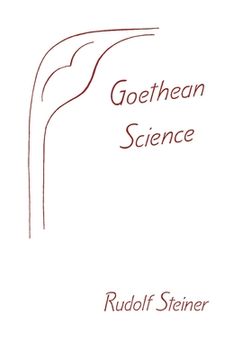
portada Goethean Science: (Cw 1) (en Inglés)
Formato
Libro Físico
Traducido por
Idioma
Inglés
N° páginas
264
Encuadernación
Tapa Blanda
Dimensiones
21.6 x 14.0 x 1.5 cm
Peso
0.34 kg.
ISBN13
9781957569321

Goethean Science: (Cw 1) (en Inglés)

Rudolf Steiner (Autor) · William Lindeman (Traducido por) · Mercury Press (Canada) · Tapa Blanda

Goethean Science: (Cw 1) (en Inglés) - Steiner, Rudolf ; Lindeman, William

Más barato Libro Nuevo Importado
Envío: 16 a 21 días háb.
S/ 227,92S/ 102,56
-55%
Más rápido Libro Nuevo Importado
Envío: 12 a 17 días háb.
S/ 273,45S/ 123,05
-55%
Costos de importación incluídos en el precio ✅
Libro Nuevo Más barato

Quedan 100 unidades

S/ 102,56
Llega entre el 31 Ago y el 08 Sep a CERCADO DE LIMA, Lima. Seleccionar ubicación

Reseña del libro "Goethean Science: (Cw 1) (en Inglés)"

Written in 1883 (CW 1) Goethean Science features Rudolf Steiner's introductions to Goethe's works, re-visioning the meaning of knowledge and how we attain it. Goethe had discovered how thinking could be applied to organic nature and that this experience requires not just rational concepts but a whole new way of perceiving.At the youthful age of twenty-one, Steiner was chosen to edit Goethe's scientific writings for the principle Goethe edition of his time. Goethe's literary genius was universally acknowledged; it was Steiner's task to understand and comment on Goethe's scientific achievements. Steiner recognized the significance of Goethe's work with nature and his epistemology, and here began Steiner's own training in epistemology and spiritual science. In an age when science and technology have been linked to great catastrophes, many are looking for new ways to interact with nature. With a fundamental declaration of the interpenetration of our consciousness and the world around us, Steiner shows how Goethe's approach points the way to a more compassionate and intimate involvement with nature.
Rudolf Steiner
  (Autor)
Ver Página del Autor
Rudolf Steiner (Donji Kraljevec, Imperio austrohúngaro, hoy Croacia, 25 o 27 de febrero de 18611​-Dornach, Suiza, 30 de marzo de 1925) fue un filósofo austriaco, erudito literario, educador, artista, autor teatral, pensador social y ocultista. Fue el fundador de la antroposofía, la educación Waldorf, la agricultura biodinámica, la medicina antroposófica5​ y de la nueva forma artística de la euritmia.

Describió la antroposofía como sigue: La antroposofía es un sendero de conocimiento que quisiera conducir lo espiritual en el hombre a lo espiritual en el universo. Pueden ser antropósofos quienes sienten determinadas cuestiones sobre la esencia del hombre y del mundo como una necesidad tan vital como la que se siente cuando tenemos hambre y sed.

Steiner propuso una forma de individualismo ético, al que luego añadió un componente más explícitamente espiritual. Derivó su epistemología de la visión del mundo de Johann Wolfgang Goethe, según la cual el pensamiento es un órgano de percepción al igual que el ojo o el oído. Del mismo modo que el ojo percibe colores y el oído sonidos, así el pensamiento percibe ideas.
Ver más
Ver menos

Opiniones del libro

Preguntas frecuentes sobre el libro

Todos los libros de nuestro catálogo son Originales.
El libro está escrito en Inglés.
La encuadernación de esta edición es Tapa Blanda.

Preguntas y respuestas sobre el libro

¿Tienes una pregunta sobre el libro? Inicia sesión para poder agregar tu propia pregunta.

Opiniones sobre Buscalibre

Ver más opiniones de clientes