Cyber Manía ¡Hasta 50% OFF y envío rápido!  Ver más

Enviar a
CERCADO DE LIMA, Lima
0
  • argentina
  • chile
  • colombia
  • españa
  • méxico
  • perú
  • estados unidos
  • internacional

Selecciona tu país

América

Europa

Resto del mundo

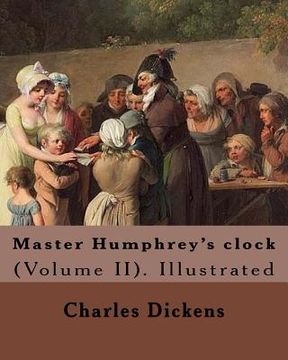
portada Master Humphrey's clock . By: Charles Dickens, Illustrated By: George Cattermole and By: Hablot ( Knight) Browne. (Volume II).: In three volumes, Il (en Inglés)
Formato
Libro Físico
Editorial
Idioma
Inglés
N° páginas
256
Encuadernación
Tapa Blanda
Dimensiones
25.4 x 20.3 x 1.4 cm
Peso
0.51 kg.
ISBN13
9781981671670

Master Humphrey's clock . By: Charles Dickens, Illustrated By: George Cattermole and By: Hablot ( Knight) Browne. (Volume II).: In three volumes, Il (en Inglés)

Charles Dickens (Autor) · George Cattermole (Autor) · Createspace · Tapa Blanda

Master Humphrey's clock . By: Charles Dickens, Illustrated By: George Cattermole and By: Hablot ( Knight) Browne. (Volume II).: In three volumes, Il (en Inglés) - Charles Dickens

Libro Nuevo Importado
Envío: 16 a 21 días háb.
S/ 181,22S/ 81,55
-55%
Costos de importación incluídos en el precio ✅
Libro Nuevo

Quedan más de 100 unidades

S/ 81,55
Llega entre el 07 Ago y el 17 Ago a CERCADO DE LIMA, Lima. Seleccionar ubicación

Reseña del libro "Master Humphrey's clock . By: Charles Dickens, Illustrated By: George Cattermole and By: Hablot ( Knight) Browne. (Volume II).: In three volumes, Il (en Inglés)"

Master Humphrey's Clock was a weekly periodical edited and written entirely by Charles Dickens and published from 4 April 1840 to 4 December 1841. It began with a frame story in which Master Humphrey tells about himself and his small circle of friends (which includes Mr. Pickwick), and their penchant for telling stories. Several short stories were included, followed by the novels The Old Curiosity Shop and Barnaby Rudge. It is generally thought that Dickens originally intended The Old Curiosity Shop as a short story like the others that had appeared in Master Humphrey's Clock, but after a few chapters decided to extend it into a novel. Master Humphrey appears as the first-person narrator in the first three chapters of The Old Curiosity Shop but then disappears, stating, "And now that I have carried this history so far in my own character and introduced these personages to the reader, I shall for the convenience of the narrative detach myself from its further course, and leave those who have prominent and necessary parts in it to speak and act for themselves." Master Humphrey is a lonely man who lives in London. He keeps old manuscripts in an antique longcase clock by the chimney-corner. One day, he decides that he would start a little club, called Master Humphrey's Clock, where the members would read out their manuscripts to the others. The members include Master Humphrey; a deaf gentleman, Jack Redburn; retired merchant Owen Miles; and Mr. Pickwick from The Pickwick Papers. A mirror club in the kitchen, Mr. Weller's Watch, run by Mr. Weller, has members including Humphrey's maid, the barber and Sam Weller. Master Humphrey's Clock appeared after The Old Curiosity Shop, to introduce Barnaby Rudge. After Barnaby Rudge, Master Humphrey is left by himself by the chimney corner in a train of thoughts. Here, the deaf gentleman continues the narration. Later, the deaf gentleman and his friends return to Humphrey's house to find him dead. Humphrey has left money for the barber and the maid (no doubt by traces of love that they would be married). Redburn and the deaf gentleman look after the house and the club closes for good. In the portion of Master Humphrey's Clock which succeeds The Old Curiosity Shop, Master Humphrey reveals to his friends that he is the character referred to as the 'single gentleman' in that story....... Charles John Huffam Dickens ( 7 February 1812 - 9 June 1870) was an English writer and social critic. He created some of the world's best-known fictional characters and is regarded by many as the greatest novelist of the Victorian era. His works enjoyed unprecedented popularity during his lifetime, and by the 20th century critics and scholars had recognised him as a literary genius. His novels and short stories enjoy lasting popularity. Born in Portsmouth, Dickens left school to work in a factory when his father was incarcerated in a debtors' prison. Despite his lack of formal education, he edited a weekly journal for 20 years, wrote 15 novels, five novellas, hundreds of short stories and non-fiction articles, lectured and performed extensively, was an indefatigable letter writer, and campaigned vigorously for children's rights, education, and other social reforms......... George Cattermole (10 August 1800 - 24 July 1868) was an English painter and illustrator, chiefly in watercolours. He was a friend of Charles Dickens and many other literary and artistic figures.... Hablot Knight Browne (10 July 1815 - 8 July 1882) was an English artist and illustrator. Well-known by his pen name, Phiz, he illustrated books by Charles Dickens, Charles Lever, and Harrison Ainsworth................
Charles Dickens
  (Autor)
Ver Página del Autor
Charles Dickens (7 de febrero de 1812 - 9 de junio de 1870) nació en Portsmouth y era el primogénito varón de un funcionario de la Armada Real. A los doce años, el encarcelamiento de su padre por deudas lo obligó a ponerse a trabajar en una fábrica de betún. Su educación fue irregular: aprendió por su cuenta taquigrafía, trabajó como ayudante en el bufete de un abogado y finalmente fue corresponsal parlamentario del Morning Chronicle.

De familia humilde, el "bueno de Carlos" no recibió educación formal hasta los nueve años, siendo muy juzgado por la crítica de la época al considerar que Dickens era demasiado autodidacta. Su vida daría un giro inesperado con el encarcelamiento de su padre por las deudas, trasladándose su familia a vivir con él a la cárcel, permitido en ese momento por las leyes británicas. A la edad de 12 años ya es considerado apto para comenzar a trabajar en una fábrica de tintes. A pesar de que la situación de su familia había mejorado, su madre puso su empeño en que siguiera trabajando allí, inspirándole a escribir una de sus obras cumbre, David Copperfield.

Sus artículos, luego recogidos en Escenas de la vida de Londres por «Boz» (1836-1837), tuvieron gran éxito y, con la aparición en 1837 de Los papeles póstumos del Club Pickwick, Dickens se convirtió en un auténtico fenómeno editorial. Novelas como Oliver Twist (1837-1839), Nicholas Nickleby (1838-1839) o Barnaby Rudge (1841) alcanzaron enorme popularidad, así como algunas crónicas de viajes, como Estampas de Italia (1846). Con Dombey e hijo (1846-1848) inició su época de madurez, de la que son buenos ejemplos David Copperfield (1849-1850), su primera novela en primera persona y su favorita, en la que desarrolló algunos episodios autobiográficos; La Casa lúgubre (1852-1853); La pequeña Dorrit (1855-1857), Historia de dos ciudades (1859), Grandes esperanzas (1860-1861) y Nuestro amigo común (1864-1865). Murió en Gad's Hill, su casa de campo en Higham, en el condado de Kent.
Ver más
Ver menos

Opiniones del libro

Preguntas frecuentes sobre el libro

Todos los libros de nuestro catálogo son Originales.
El libro está escrito en Inglés.
La encuadernación de esta edición es Tapa Blanda.

Preguntas y respuestas sobre el libro

¿Tienes una pregunta sobre el libro? Inicia sesión para poder agregar tu propia pregunta.

Opiniones sobre Buscalibre

Ver más opiniones de clientes