Semana del Libro Importado ¡Hasta 55% OFF!  Ver más

Enviar a
CERCADO DE LIMA, Lima
0
  • argentina
  • chile
  • colombia
  • españa
  • méxico
  • perú
  • estados unidos
  • internacional

Selecciona tu país

América

Europa

Resto del mundo

Aprovecha esta PREVENTA
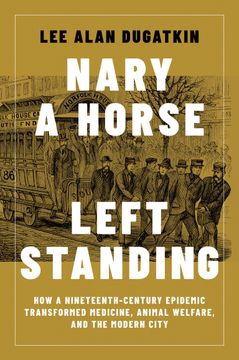
portada Nary a Horse Left Standing: How a Nineteenth-Century Epidemic Transformed Medicine, Animal Welfare, and the Modern City (en Inglés)
Formato
Libro Físico
Editorial
Año
2026
Idioma
Inglés
N° páginas
256
Encuadernación
Tapa Dura
Dimensiones
22.86 x 15.24 cm
ISBN13
9780262054546

Nary a Horse Left Standing: How a Nineteenth-Century Epidemic Transformed Medicine, Animal Welfare, and the Modern City (en Inglés)

Lee Alan Dugatkin (Autor) · MIT Press · Tapa Dura

Nary a Horse Left Standing: How a Nineteenth-Century Epidemic Transformed Medicine, Animal Welfare, and the Modern City (en Inglés) - Lee Alan Dugatkin

Más barato Libro Nuevo Importado
Envío: 66 a 73 días háb.
S/ 244,97S/ 110,23
-55%
Más rápido Libro Nuevo Importado
Envío: 66 a 71 días háb.
S/ 289,22S/ 130,15
-55%
Costos de importación incluídos en el precio ✅
Libro Nuevo Más barato

Quedan 50 unidades

S/ 110,23
Llega entre el 14 Sep y el 24 Sep a CERCADO DE LIMA, Lima. Seleccionar ubicación

Reseña del libro "Nary a Horse Left Standing: How a Nineteenth-Century Epidemic Transformed Medicine, Animal Welfare, and the Modern City (en Inglés)"

How a devastating outbreak of horse flu in the 1870s ground city life to a halt—but ultimately revolutionized animal rights, medicine, and transportation.

From a veteran science writer, evolutionary biologist, historian of science, and the coauthor of the acclaimed How to Tame a Fox (and Build a Dog).

In the 1870s, horses were the lifeblood of North American cities. New York, Boston, Chicago, and Toronto relied on tens of thousands of workhorses to power daily life. Then, in late 1872 and into 1873, a devastating outbreak of horse flu—known as The Great Epizootic—swept across the continent.

In Nary a Horse Left Standing, Lee Dugatkin chronicles this little-known crisis, revealing how the epidemic disrupted nearly every aspect of urban life. From coast to coast, livelihoods collapsed as horses lay sick, or worse dying, on stable floors, fires raged unchecked without horse-drawn wagons, and city development stalled for lack of horsepower. Just as the Gilded Age was dawning and industrialists were poised to amass fortunes, the flu slowed progress to a crawl.

Yet the tragedy also catalyzed revolutions in medicine, animal rights, and transportation. Veterinary science in the U.S. was still emerging, but detailed medical reports from the epidemic helped validate germ theory and discredit outdated beliefs. The crisis also spotlighted early animal welfare efforts, with fledgling groups like the ASPCA advocating for sick horses forced to work. Finally, the sheer vulnerability of relying on animals for transport spurred a shift toward mechanized systems.

As illuminating as it is humbling, the book brings to life a critical account of a crisis that still speaks to the complex public health and transportation challenges we face today.

Opiniones del libro

Preguntas frecuentes sobre el libro

Todos los libros de nuestro catálogo son Originales.
El libro está escrito en Inglés.
La encuadernación de esta edición es Tapa Dura.

Preguntas y respuestas sobre el libro

¿Tienes una pregunta sobre el libro? Inicia sesión para poder agregar tu propia pregunta.

Opiniones sobre Buscalibre

Ver más opiniones de clientes